
If you're bad at trading, or want to be better, you need to develop your broader set of skills. Most of crypto is underinvested in themselves and it shows, but you can build edge.
Learn How to Think
The most uncomfortable realization in crypto is discovering you don't have original thoughts. You're refreshing Twitter, waiting for someone with more followers to tell you what to buy. You're not trading; you're following. And followers, by definition, arrive late to every party.
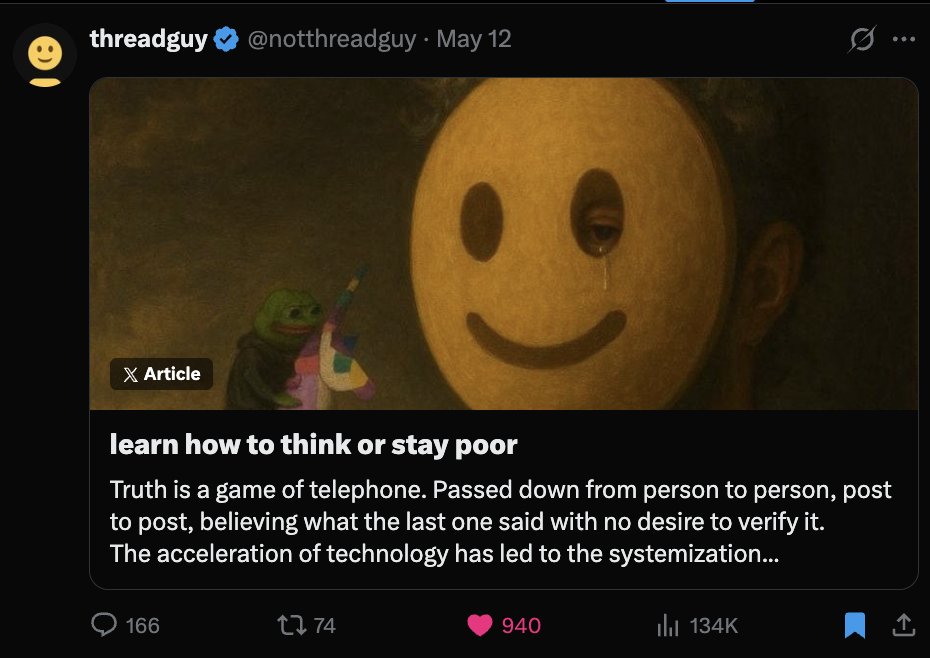
This borrowed conviction problem runs deeper than just poor returns. When you trade on someone else's thesis, you're attempting to replicate their entire mental model without access to any of the underlying architecture. You don't know what confluence of factors led them to this trade, what their risk management looks like, or most importantly, when they've changed their mind. They could be distributing into your buys right now, and you'd never know until they post their "took profits here" screenshot.
I've watched this movie play out hundreds of times. Someone with genuine insight develops a thesis about, say, the intersection of AI and crypto. They accumulate positions quietly, maybe share some early thoughts to test their framework against criticism. By the time their conviction is high enough to post definitively, they're already positioned. Then the followers pile in, driving up their bags, creating the exact exit liquidity they need. The original thinker makes money not because they were right about the technology, but because they understood the social dynamics of information dissemination.
The cure for this isn't to find better people to follow. It's to develop your own capacity for original thought. This sounds abstract, but can be quite mechanical.
Read More & Read More Diversely
Original thinking in markets comes from consuming different inputs than everyone else and processing them through your own analytical framework.
We're all reading the same viral tweets, the same substacks that get shared in the same Telegram groups. This creates an echo chamber where everyone is working with identical information sets. When everyone has the same information, nobody has edge.
The real alpha lives in the weird corners. Take Jacob's "Hyperstructures" essay from 2022. Most people haven't read it, but it essentially predicted the entire DeFi resurgence we're seeing now. Or Pierre Rochard's "Speculative Attack" from 2014, which laid out the game theory of Bitcoin adoption that's still playing out a decade later. These aren't just good reads; they're frameworks that let you see several moves ahead.
Send it, go read a book like "Reminiscences of a Stock Operator", "The Long Good Buy", or "Play Money". I promise you that you will be rewarded for diversifying the sources and types of content you read. I also promise you, no matter how much you're reading today, you're not reading enough. There's literally nothing but upside through reading and packing as much information into that tiny little brain of yours as you can.
And don't stop at crypto content, Read Semi Analysis's breakdown of TSMC's competitive moat. Luke Gromen's work on dollar system dynamics helps explain why Bitcoin pumps when it does better than any on-chain analyst. Read Curtis Yarvin's work about the power structures at play in the US Government if you want to build an opinion on what Trump can vs cannot accomplish with his mandate.
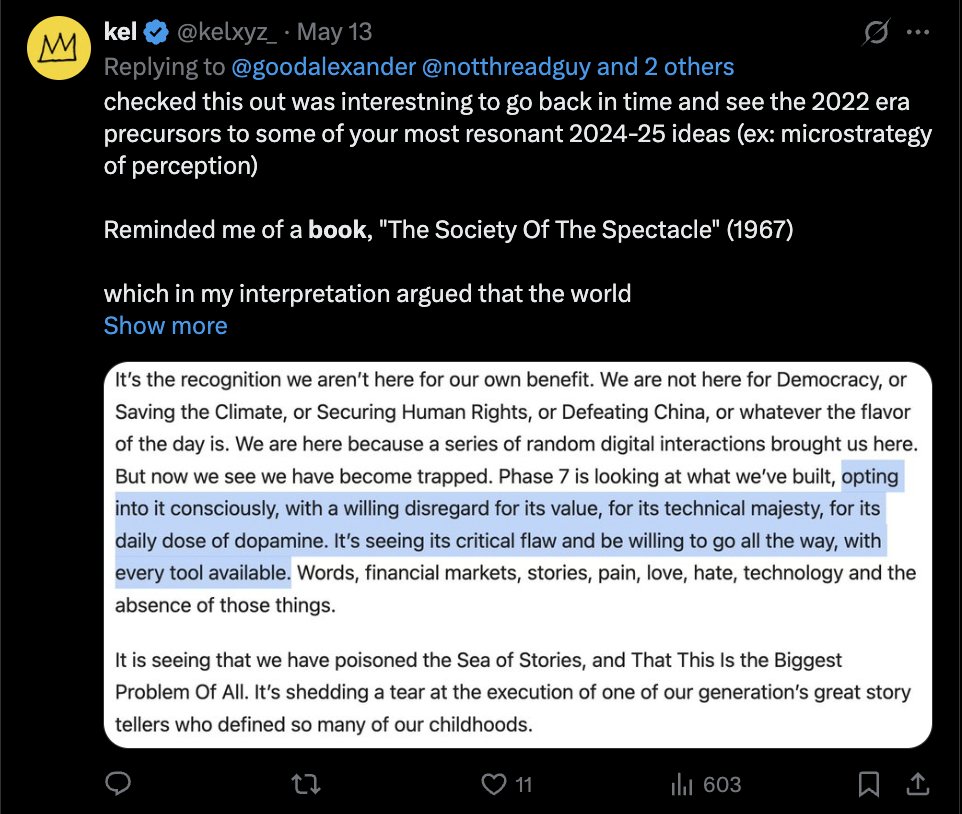
The compounding effect of diverse reading is extraordinary. When you read about how the Japanese yen carry trade works, suddenly you understand why crypto dumps at certain times. When you study how luxury brands create artificial scarcity, you see the NFT playbook before it happens. When you understand how Nvidia allocates H100s, you can predict which AI tokens have real compute backing versus marketing fluff.
And for the love of god read the docs so you know what you're actually buying.
Write More
Writing is thinking made visible. Every incoherent trade thesis you have seems brilliant until you try to explain it in writing. The act of writing forces you to confront the gaps in your logic, the assumptions you haven't examined, the connections you haven't actually made.
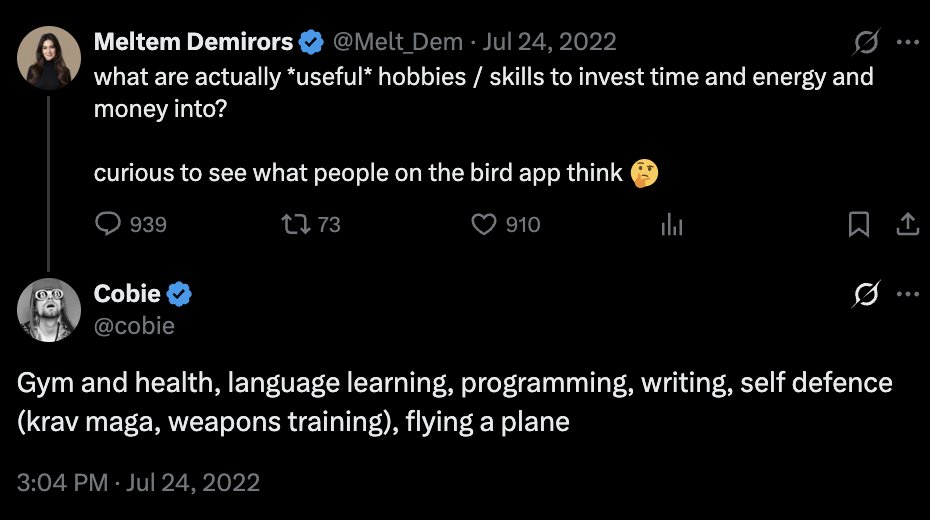
I started writing long-form analysis not for an audience but for clarity. When you write out why you're bullish on something, you can't hide behind vague notions of "good vibes" or "strong community." You have to articulate specific catalysts, identify real risks, establish clear invalidation points. This process alone will save you from 90% of bad trades.
The magic happens when you start writing consistently. Your brain begins processing information differently, constantly searching for connections and patterns worth exploring. You develop what I call "thesis brain" - the ability to see tradeable narratives forming before they become consensus. It's pattern recognition trained through repetition.
Learn How to Use Data
Blockchains are the most transparent financial system ever created. Every transaction, every wallet movement, every smart contract interaction is public and queryable. Yet most traders look at the same three charts on CoinGecko and call it research.
The information asymmetry in crypto isn't about access - everyone can see everything. It's about interpretation and synthesis. It's about asking better questions and knowing where to look for answers.
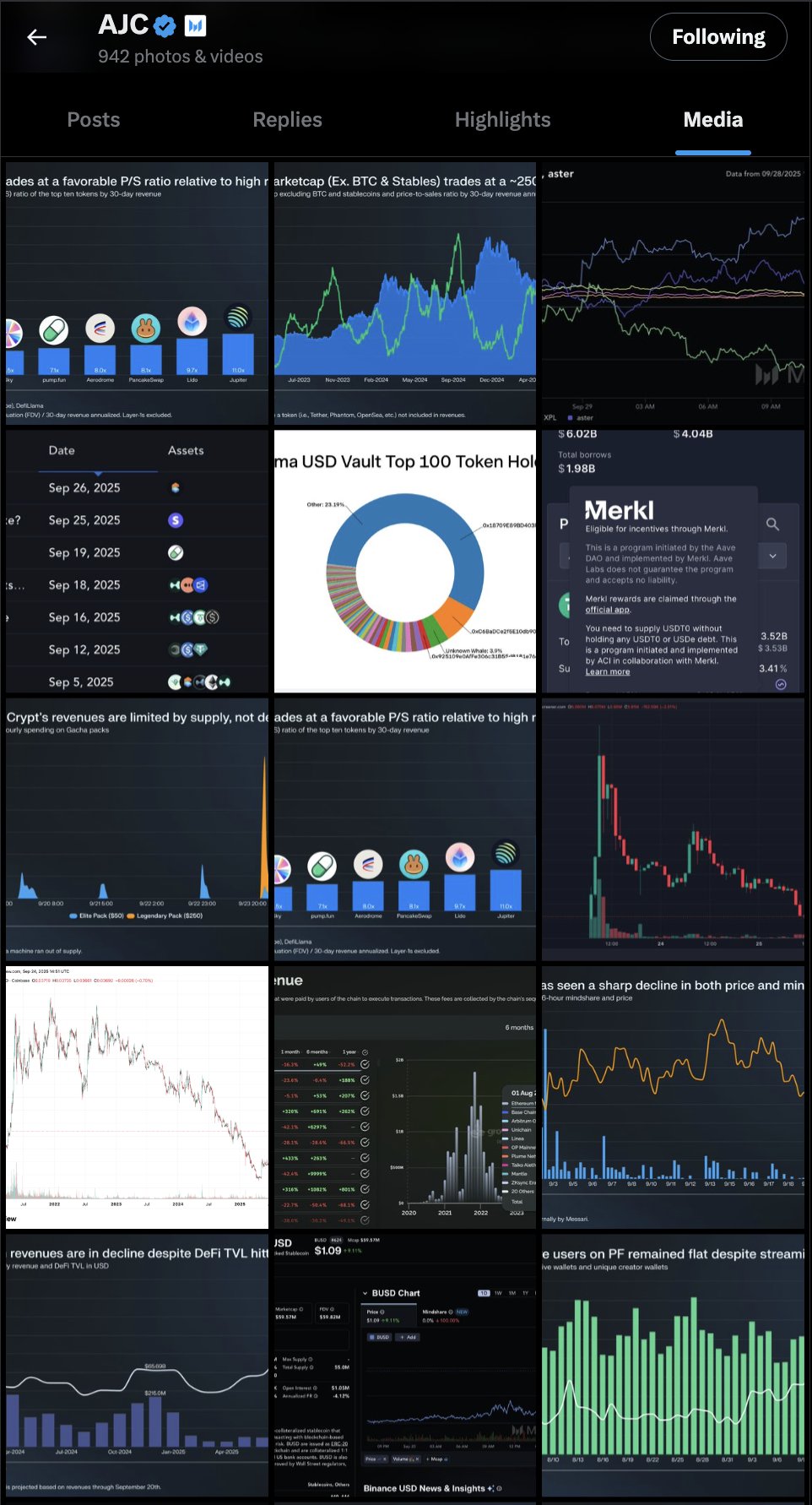
Take revenue analysis. DeFi protocols generate real fees, real revenue, real yields. But most traders wait for someone else to calculate these numbers and package them into a pretty dashboard. Meanwhile, anyone who can write basic SQL queries on Dune can calculate a protocol's revenue before it shows up on DeFi Llama. They can spot trend changes weeks before they become Twitter threads.
Learn How to Code
The revelation that everything in crypto is programmable should fundamentally change how you interact with markets. We're not trading on the NYSE where you need a Bloomberg terminal and institutional access. Every protocol has APIs, every contract can be called directly, every strategy can be automated.
Start simple. Write a script that checks your farming yields every hour. Build something that alerts you when a specific wallet makes a trade. Create a basic market maker that provides liquidity around your spot positions. These aren't complex programs - ChatGPT can write most of them. But they transform you from a manual clicker into someone operating at internet speed.
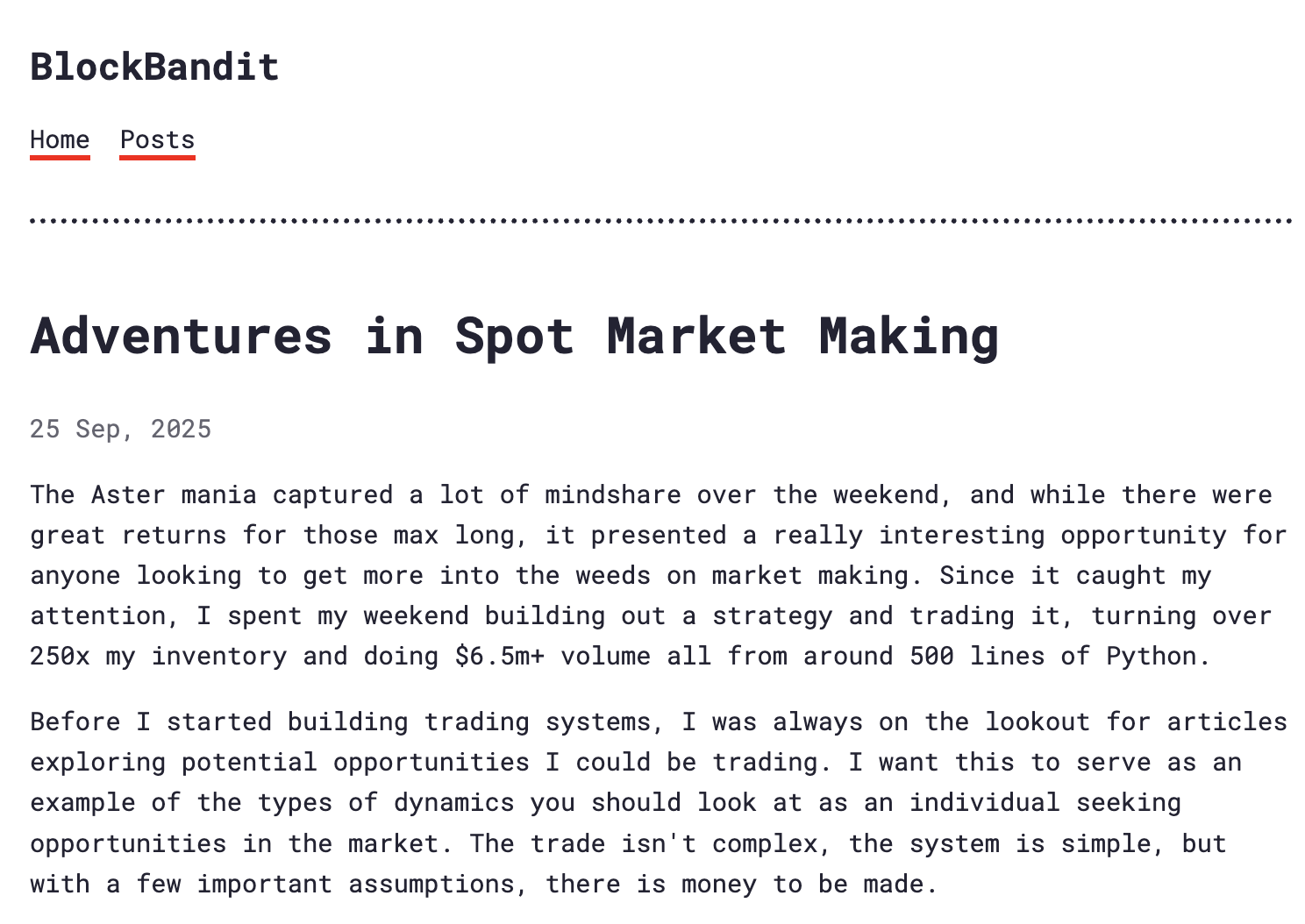
The compound effects here can be dramatic. Imagine using a directional market making script to squeeze an extra 1% out of every buy and sell. Imagine using an auto-compounder to squeeze and extra 2% out of every yield farm. Imagine using a wash trading script to put you in the top tier of every points program. Imagine using a sybil script to optimize airdrops.
More importantly, coding forces you to think systematically about markets. You can't write emotional code. A program doesn't panic sell or FOMO buy. When you translate your trading strategy into code, you're forced to define exact parameters, specific conditions, clear logic. This discipline alone will improve your manual trading dramatically.
Learn How to Trade
You should be trading everything: Try NFTs. Maybe you're actually good at sports betting? Have you seen these new prediction market things? Did you see Logan Paul has a Pokémon card worth 5 million dollars?! If you can't tell where the market is going, learn to spread trade. If you're an adrenaline junkie open up the 1min chart. I know a guy in New York who makes six figs a year buying & selling dinner reservations.
The point here is that everything is a market and any market can be traded in many different ways. You never really know where your edges are until you find them. Yes it's going to cost you money. But the honest fact is that you cannot make millions of dollars until you've lost hundreds of thousands of dollars. The market will not teach you any lesson for free so you need to get comfortable paying the price. If that isn't for you, it's okay -- cold store some Bitcoin and put your 401k on autopilot. But if you want greatness, you have to learn how to engage with the natural risk of the market.
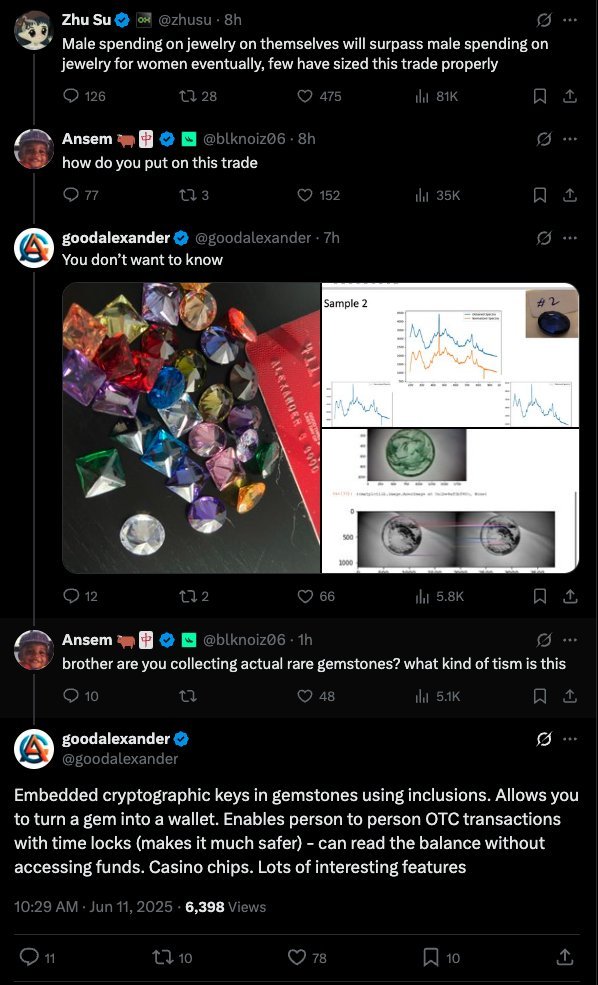
The other advantage here is that given the sheer number of markets and trading strategies in existence, there's a really decent chance you find you have talent in a handful of things. In my opinion this diversity is ESSENTIAL to long term success in the markets. There's no such thing as a forever market. There will be periods of time when there's no such thing as a winning strategy in the solana trenches. But the key to remember is that when one door closes another opens. At that moment you need to be able to adapt to wherever the real action in the market is.
Fluency across markets makes you antifragile. When crypto enters deep bear markets, maybe you're trading prediction markets around elections. When NFTs die, perhaps you're in collectibles. When DeFi yields compress, maybe you're providing liquidity in sports betting markets. The game continues; only the venue changes.
Learn How to Social
Crypto is uniquely suited for network building because it's inherently internet-native. Geography doesn't matter. Credentials don't matter. Only the quality of your thinking and the value you provide matter. This is remarkably egalitarian if you approach it correctly.
The key is to provide value before you extract it. Share tools you've built. Explain complex concepts simply. Make introductions between people who should know each other. Answer questions without expecting anything in return. Being altruistic works. The value you put into the ecosystem comes back multiplied.

You don't have to hate the cabals if you can make friends and score a couple invites into the right telegram channels. Build your personal brand. Don't be afraid to post your opinions online. Post in good faith. Most importantly, keep your DMs open, you never know who's gonna show up in them.
If you can get this right then you can position yourself such that you don't always have to be right. You don't always have to be online. You can build a critical cohort of friends that support each other. Trust me, this is so much easier when you have help.
Conclusion
Most of you will read this and go back to refreshing Twitter, waiting for the next call. That's fine. The market needs exit liquidity. But for those who get it, who understand that crypto rewards the prepared mind, the opportunity is extraordinary. The infrastructure you build today - intellectual, technical, social - compounds forever. Every book you read, every script you write, every connection you make adds another layer to your edge.
These are the skills you're going to need to start winning in this market. I know they're the skills I'm always developing, so you're at least not going to beat me unless you do the same :)