Recap · August 31, 2025 · 46:25
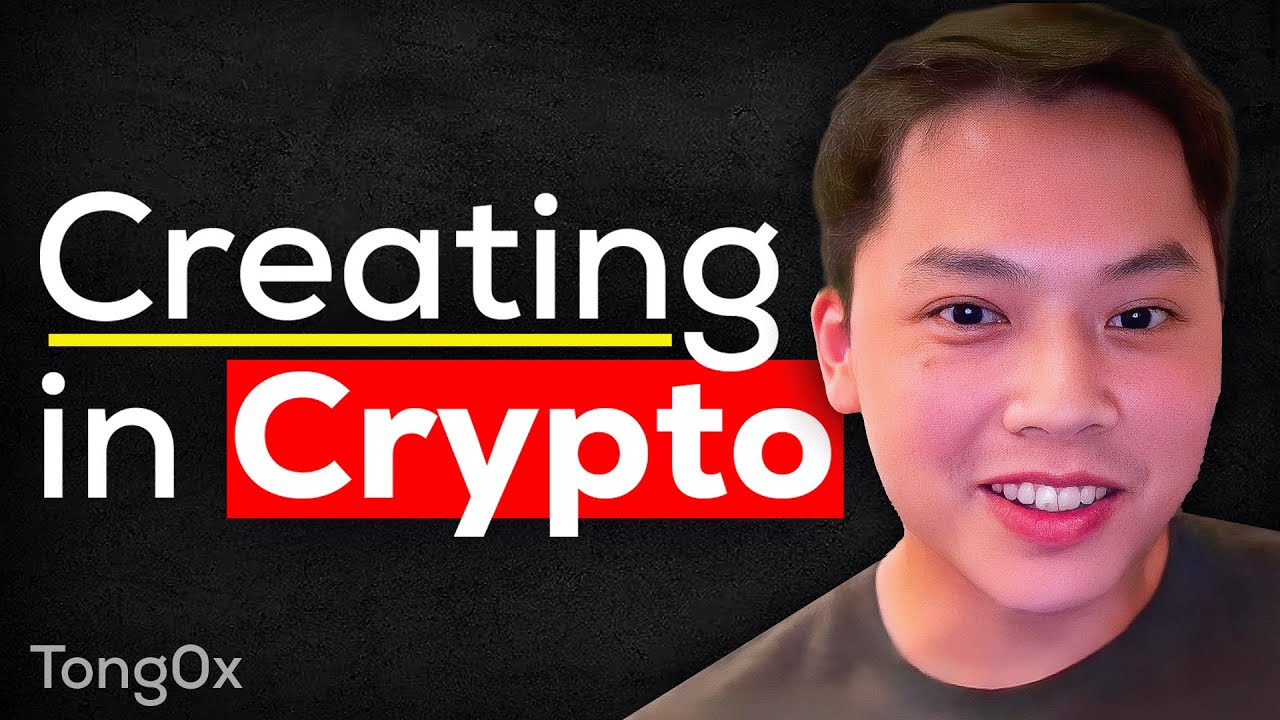
Daniel Tenreiro: Crypto's Future, Peter Thiel, Macro and More | TG Podcast
The Signal
Former journalist and macro trader Daniel Tenreiro explains how GBTC's discount, election-linked Bitcoin price action, and a $400 Trump-token trade pulled him into crypto. He sees inefficient Bitcoin-linked equities as fertile ground, macro as a search for asymmetric breaks in unsustainable regimes, and Bitcoin as a counterweight to concentrated institutional and technological power.
Key Takeaways
- 01
Bitcoin offered unusually clean macro signals
Compared with decomposing every move in bonds, currencies, or oil, Bitcoin's response to Trump's election odds was straightforward. That made it useful as an initially uncorrelated expression inside a broader macro strategy.
- 02
Preparedness matters more than constant activity
A roughly $400 Trump-token purchase became about $15,000 by the next day and showed Tenreiro that an exceptional crypto opportunity may appear only occasionally. The requirement is to have capital and operational access ready across relevant chains when it does.
- 03
Bitcoin equities remain inefficient
Treasury-company SPACs, warrants, converts, and common shares can represent nearly identical Bitcoin exposure yet trade at inconsistent prices. Tenreiro now hunts those arithmetic and structure-driven gaps rather than assuming traditional-market efficiency has reached the category.
- 04
Macro trades break false equilibria
Soros and Druckenmiller's pound trade illustrates the form: policy was tightening into a weak economy to defend an exchange-rate peg, creating limited upside for sterling and a large devaluation tail. Macro works when volatility exposes a regime that cannot endure.
- 05
There is no risk-free scientific edge
Tenreiro rejects the industry's tendency to package investing as neat, repeatable science. Great managers can perform for years and still fail; in crypto, spectacular returns come from correctly selecting and owning the asset, not disguising directional risk as a complex multi-strategy process.
On the Record
“Every billionaire on earth is going to own a little bit of Bitcoin.”
“You just have to be there for one, you know, one, but you got to be ready.”
“I think of myself as just like you have to look out at what's going on and then you find the trade.”
“There's no making money without taking risk.”
The Breakdown
Economics, journalism, and the macro desk
Tenreiro studied economics and covered trade and finance at National Review during the first Trump administration's China negotiations. COVID removed much of what made reporting attractive, so he turned toward markets, pursued hedge-fund work, and eventually traded macro at Peter Thiel's family office. The through-line was an interest in how policy, growth, rates, currencies, and capital interact.
GBTC opens the Bitcoin door
His first major on-ramp was Grayscale Bitcoin Trust before spot-ETF approval, when it traded near a 50% discount and Bitcoin itself was cheap. Spending time around billionaires made a modest future allocation feel almost inevitable: even if Bitcoin served only as insurance for the ultra-wealthy, their one- or two-percent positions could create substantial demand.
Election convexity and the Trump token
During 2024, Bitcoin tracked Trump's election odds clearly enough to become a simple macro expression. After Trump won, Tenreiro looked for leveraged exposure. Then a Truth Social alert announced the official token; suspecting a hack but willing to lose two SOL, he put in roughly $360–$400 and exited around $15,000 the next day. The episode taught him to maintain basic readiness for rare, enormous trades.
The pricing gaps in Bitcoin equities
Exploring the wider ecosystem led him to treasury-company securities. Several SPACs may hold economically similar Bitcoin exposure while their warrants, converts, and common shares imply inconsistent valuations. Unlike mature traditional markets, those instruments are not always reconciled by simple net-asset-value arithmetic and volatility, leaving trades for investors who can compare structures.
Why discretionary macro needs events
Tenreiro traces modern discretionary macro from Soros through free-floating currencies, commodities, and Thiel's Clarium. Clarium's peak-oil thesis benefited from rising emerging-market demand and oil's climb from roughly $40 in 2004 to $140 in 2008, then suffered when the financial crisis collapsed the trade. The style faded after 2008 because suppressed rates and volatility left fewer large regime shifts.
The pound trade as a model of asymmetry
Britain was defending sterling inside Europe's exchange-rate mechanism by tightening policy despite economic weakness. Soros's team reasoned that rates could not rise indefinitely: the pound had limited room upward but no comparable floor if the peg broke. A roughly $4 billion position earned about $1 billion, making the trade legendary because private capital correctly challenged a national policy regime that could not hold.
Bitcoin as a political-economic counterweight
Asked whether crypto harms society, Tenreiro separates Bitcoin from the wider casino. He regards hyper-gambling critically, though not as uniquely worse than regulated betting. Bitcoin's transparent, coordinated wealth base matters more to him: it gives younger holders and outsiders a power center distinct from Wall Street, Washington, and an AI oligarchy, even if that wealth does not arise from conventional productive activity.
Find the trade, accept the risk
Tenreiro closes by rejecting a fixed, predeclared 'edge.' Investment firms market scientific categories to allocators, but even elite managers eventually blow up because returns require risk. In a small asset class where tokens can move by orders of magnitude, he believes the honest task is to understand the world, identify the right asset, and own it better than the next participant.
Distilled from the episode transcript · Counterparty Recap Desk